Mardi Gras People Design
A Designer’s First Look: Joyful, Crowd-Sourced Energy in Stitch Form
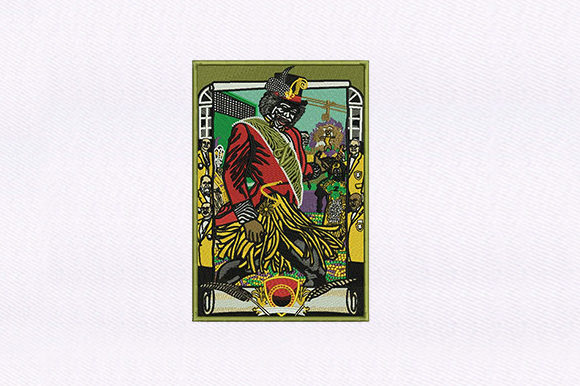
Opening the Mardi Gras People Design file feels like stepping into a lively street parade—no brass band required. The composition shows three stylized figures mid-celebration: one waving beads, another holding a mask, and a third dancing with arms raised. It’s not photorealistic, but it’s expressive—bold outlines, rhythmic spacing, and just enough detail to read clearly at 3–4 inches tall. As a designer who’s stitched hundreds of holiday embroidery files, I immediately sensed its strength: it’s *designed for recognition*, not realism. That makes it ideal for tote bags, aprons, or kids’ sweatshirts where charm and clarity matter more than fine shading.
Where It Shines: Real Projects, Real Customers
Last week, I prepped a batch of custom embroidered tote bags for a New Orleans–themed boutique pop-up. I chose Mardi Gras People Design as the centerpiece—centered on natural canvas, 3.8" wide, stitched in vibrant purple, green, and gold thread. Why? Because customers don’t pause to admire stitch count—they smile when they recognize the spirit. The design held up beautifully on medium-weight cotton canvas with tear-away stabilizer. The satin-stitched outlines stayed crisp, and the fill-stitched bodies retained shape without puffing or bleeding. It looked handmade, not mass-produced—a subtle but critical distinction for Etsy sellers and craft fair vendors.
I also tested it on a lightweight baby onesie (100% cotton jersey) using cut-away stabilizer and reduced density settings. The figures remained legible, though I skipped the smallest bead details on that version—better to prioritize softness and safety over micro-detail for infant wear. For sweatshirt embroidery, I’d recommend keeping it under 4.2" tall; any larger, and the fill areas risk stiffness on fleece-backed fabric.
Where to Proceed Thoughtfully
This isn’t a “set-and-forget” design—and that’s a good thing. Its energy comes from intentional rhythm, not automatic compatibility. On curved surfaces like caps or beanies, test placement first: the central figure’s upward gesture reads strongest when vertical, so avoid stitching it across a crown seam. On dark fabrics, check contrast early—those light-yellow highlights vanish on navy unless you boost thread brightness or add a white underlay (a quick digitizing tweak most modern software allows). And on textured fabrics like terry cloth or bouclé, simplify expectations: the running-stitch accents may soften, and tight corners—like the curve of a mask edge—can feather slightly without proper topping.
Small hoop sizes (under 4"x4") require trimming: the full layout fits best in a 5"x7" hoop. If you’re working with limited hoop real estate, isolate one figure instead of forcing all three. Also, avoid layering this over seams or bulky pockets—stitch density is moderate but consistent, and uneven tension on irregular surfaces can cause puckering near the dancers’ feet or hands.
What It Adds to Your Handmade Product—and Your Reputation
Mardi Gras People Design elevates perceived value without demanding premium pricing. Its cohesive color story and festive theme signal intentionality—not just “I added embroidery,” but “I curated an experience.” That builds trust, especially for personalized gifts or boutique merchandise. A customer buying a Mardi Gras–themed kitchen towel with this design doesn’t just get utility—they get storytelling. Same goes for nursery decor: stitched onto a cotton muslin pillow cover, it reads as playful, not kitschy, because the proportions are balanced and the line weight avoids visual noise.
For digital product sellers, this design works well in printable mockups—its clean silhouette scales cleanly from 2" thumbnails to 6" presentation views. As a commercial embroidery asset, it supports brand consistency across seasonal collections: pair it with coordinating masks, fleur-de-lis borders, or bead motifs to build a recognizable Holidays sub-brand within your shop.
Practical Notes Every Embroidery Designer Should Run Through
- Always test on scrap fabric first—especially if stitching on stretchy knits or textured weaves.
- Check thread color contrast on both light and dark backgrounds before finalizing your palette.
- Review stitch density in your editing software—if filling large areas feels heavy for your fabric, reduce density by 5–8%.
- Confirm hoop size compatibility: the full layout assumes standard 5"x7" real estate; verify native dimensions in your machine’s native format (PES, DST, VP3, etc.).
- Inspect small details like bead strings or mask ties—they’re charming but can vanish on low-res screens or dense fabrics.
- Test black-and-white mockups to ensure legibility without color cues—critical for branding and accessibility.
- Use appropriate stabilizer: cut-away for knits, tear-away for stable wovens, and optional topping for napped fabrics.
- Verify licensing terms before selling finished items or bundling the embroidery file as part of a digital product—the listing confirms it’s a machine embroidery design, but commercial rights vary by seller.
The Bottom Line for Craft Business Owners
Mardi Gras People Design isn’t just another holiday embroidery file—it’s a conversation starter, a mood setter, and a reliable workhorse for makers who value both personality and precision. It performs well across custom apparel, embroidered patches, baby items, and small shop merchandise—so long as you meet it halfway with smart prep. Whether you’re an Etsy seller launching a seasonal collection, a small-batch apparel decorator, or a hobbyist making personalized gifts, this design delivers joyful authenticity without asking for perfection in return. Just remember: great embroidery starts with thoughtful testing, not just beautiful files. Stitch it right, and it’ll do the rest.