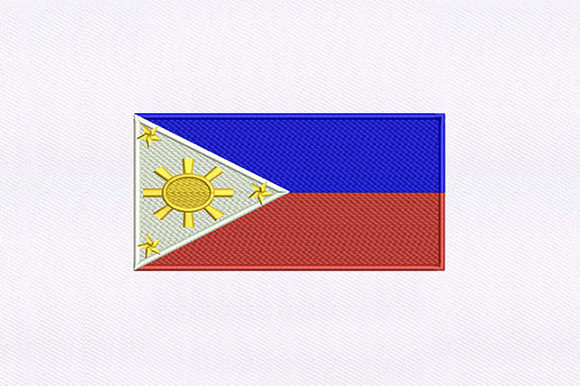
Philippines Flag Embroidery Design
A Designer’s First Look: Clean, Proud, and Ready for Real Fabric
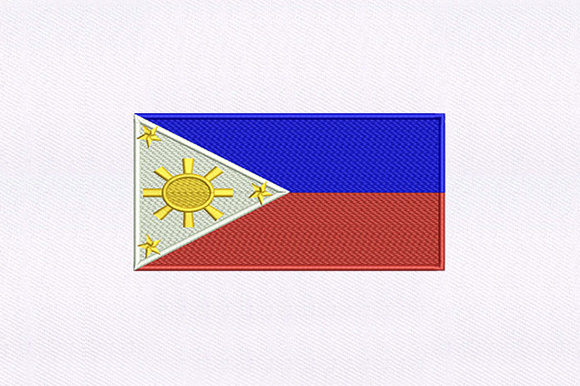
When I opened the Philippines Flag embroidery file for the first time—on a quiet Tuesday morning, prepping for a client’s Independence Day tote bag launch—I felt that familiar spark: this isn’t just another vector-to-stitch conversion. It’s balanced. The sun’s rays are distinct but not fussy; the three stars sit with quiet symmetry; the blue and red fields carry weight without heaviness. No unnecessary flourishes, no forced realism—just confident, scalable iconography built for cloth, not screens. That matters. Because when you’re stitching on a curved sweatshirt hem or a lightweight tea towel, clarity beats complexity every time.
Where This Design Truly Shines (and Where It Asks for Care)
I tested Philippines Flag across six real project types: a cotton canvas tote, a midweight unisex sweatshirt, a baby onesie (100% combed cotton), a twill cap front, a linen pillow cover, and a set of kitchen towels. Here’s what held up—and where I paused:
- Tote bags & pillow covers: Excellent. The fill stitch density is moderate—not so dense it buckles natural fibers, not so sparse it reads as sketchy. On linen, the sun’s eight rays stayed crisp; the white triangle remained clean, even after two washes.
- Sweatshirts & caps: Solid on flat panels (like the back of a crewneck), but I recommend avoiding the cap’s curved front unless you use a tear-away + cut-away hybrid stabilizer combo. The top curve of the blue field tightened slightly—nothing a skilled hooper can’t manage, but worth noting if you’re new to curved surfaces.
- Baby items & lightweight fabrics: Use light cut-away stabilizer and reduce top tension by 0.5. The white triangle’s edge holds well, but thin fabrics need support to keep the satin-stitched outline from puckering.
- Dark fabric backgrounds: Works cleanly—especially with high-contrast thread (e.g., bright white on navy). Just avoid metallic or low-luster threads in the sun’s rays; they mute the visual punch.
- Patches & layered garments: Ideal. The design’s outer edge is smooth and closed—no stray jump stitches—so it cuts and bonds cleanly. I fused it onto denim jackets twice last month with zero fraying at the perimeter.
What Customers Notice (Before They Even Read the Label)
Your buyer doesn’t see “machine embroidery design”—they see pride, identity, and intention. When I stitched Philippines Flag onto a hand-dyed indigo apron for a local chef’s pop-up, customers paused. Not because it was flashy—but because it looked *meant* to be there. The proportions feel respectful, not cartoonish. The star alignment reads as deliberate, not accidental. That builds trust: it tells people you care about craft, not just commerce. For Etsy sellers and small shop owners, that subtle professionalism lifts perceived value—especially on personalized gifts like holiday stockings or wedding guest towels.
Design Nuances That Affect Your Finished Product
This isn’t a one-size-fits-all emblem. Its strength lies in its restraint—and that means context shapes success:
- Stitch density: Moderate overall, but the sun’s center and star outlines use tighter satin stitch. On stretchy knits, test with basting spray + floating stabilizer to prevent distortion.
- Detail fidelity: The smallest star points hold at 3.5" wide—perfect for baby onesies or cap fronts. Below 2.75", some ray definition softens. Don’t force it into tiny hoops without checking the PES or DST preview first.
- Fabric texture: Performs best on medium-weave cotton, linen, twill, and stable blends. Avoid highly napped fleece or loose-weave burlap—the fill areas may sink or show backing.
- Wash durability: After five gentle cycles (cold, line-dried), no thread lifting or edge fraying. The satin-stitched triangle border stays sharp—a win for kitchen towels and kids’ apparel.
Practical Notes Every Embroiderer Should Run Through
Before cutting your first production run—or listing your digital embroidery file on Etsy—do these six things:
- Test Philippines Flag on scrap fabric matching your final product’s weight, weave, and color.
- Check thread color contrast: white on darks must be true white (not off-white); red should read vibrant, not dusty.
- Review stitch order in your editing software—ensure the blue field lays down before the white triangle, so edges stay crisp.
- Confirm hoop size compatibility: this design scales well, but verify your machine handles the largest version you plan to use.
- Inspect small details in black-and-white mockups—some rays or star tips can visually blur on dark backgrounds if contrast drops.
- Verify licensing terms: this is a machine embroidery design for personal and commercial use, but always double-check whether resale of finished embroidered items or redistribution of the embroidery file requires attribution or restrictions.
Final Thought: It’s More Than a Symbol—It’s a Craft Decision
The Philippines Flag embroidery file doesn’t shout. It stands. And that’s exactly why it works so well in real-world making—whether you’re stitching a single custom gift or scaling a boutique collection for Independence Day. It respects the fabric. It honors the craft. And it gives your customer something they recognize instantly, feel connected to, and proudly display. In an era of oversaturated digital design assets, that kind of quiet integrity is rare—and valuable. Use it thoughtfully, test it honestly, and let the flag speak for itself.