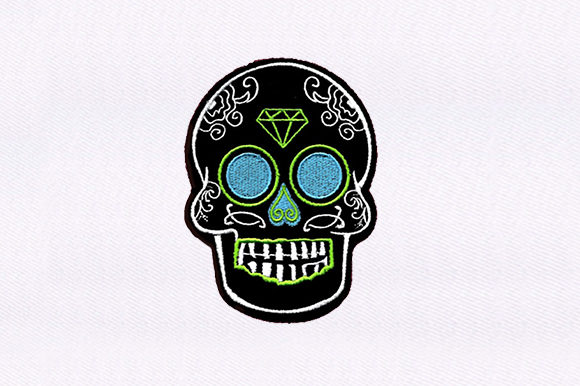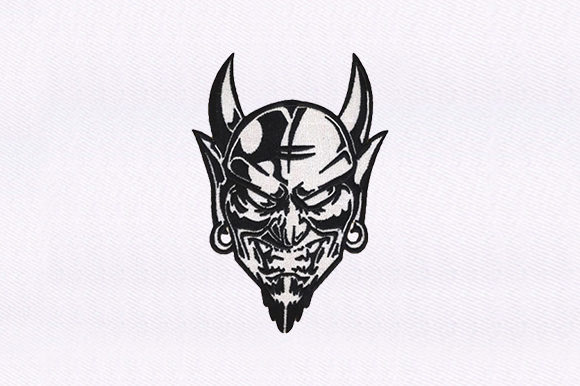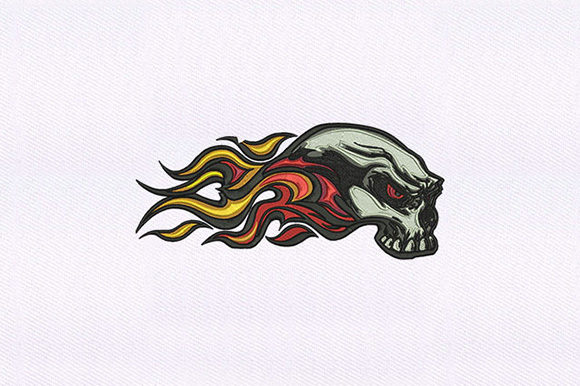
Teeth Baring Skull
A Bold, Personality-Driven Embroidery File for Small Business Merch
As an embroidery designer who’s developed hundreds of designs for small businesses—from indie bakeries to pet boutiques and creative studios—I approached Teeth Baring Skull with both curiosity and practical scrutiny. The name alone signals attitude: unapologetic, expressive, and visually immediate. This isn’t a delicate floral or minimalist monogram—it’s a machine embroidery design built to command attention. For small business owners choosing custom apparel, embroidered patches, or branded product accents, first impressions matter. And Teeth Baring Skull delivers instant visual recognition—ideal for businesses that want to stand out without saying a word.
Where It Shines in Real Business Applications
Teeth Baring Skull thrives where personality meets purpose. Think staff aprons for a craft brewery or tattoo studio—its bold silhouette reads clearly at arm’s length, reinforcing brand confidence without cluttering the garment. On tote bags for a local florist’s pop-up market stall? Yes—especially when paired with a subtle tagline or shop name beside it. As a chest patch on denim jackets for a handmade jewelry brand? Absolutely. Its simplicity ensures legibility even after repeated washing and wear, a critical factor for long-term merch value.
For Etsy sellers and craft-based brands, Teeth Baring Skull works exceptionally well as a signature embroidered patch—sewn onto bandanas, backpacks, or even packaging tags. It adds handmade authenticity while feeling intentional and cohesive. In cap embroidery, it holds up beautifully on structured front panels (think trucker hats or dad caps), especially when stitched in high-contrast thread colors like white on black or charcoal on cream. As a sleeve detail on work shirts for a vintage record shop or independent bookstore, it becomes a quiet badge of identity—not loud, but unmistakably *theirs*.
Smart Placement Considerations for Commercial Embroidery
While Teeth Baring Skull is described as “simple,” its impact depends heavily on placement and execution. Avoid using it below 2 inches in height on curved surfaces like cap brims or tight collar bands—distortion risks flattening key features like jaw definition or tooth spacing. On textured fabric (e.g., heavy twill aprons or looped cotton totes), confirm your stabilizer choice supports clean stitch coverage; lightweight cutaway or medium-weight tear-away usually works best for this level of detail.
Because it’s categorized under Halloween, keep seasonal context in mind—but don’t limit it. A café named “Skull & Spoon” could use Teeth Baring Skull year-round as a playful nod to its branding. However, avoid pairing it with overly formal fonts or corporate color palettes unless irony is part of your strategy. Also, double-check stitch density before scaling down: if the original file packs dense satin fill into small teeth or eye sockets, shrinking it too far may cause puckering or thread breakage on commercial machines.
How It Shapes Brand Identity and Customer Trust
Embroidered patches and custom apparel are often the first tactile touchpoint customers have with a small business. Teeth Baring Skull communicates confidence, creativity, and approachability—especially when executed cleanly. That perceived craftsmanship directly affects buyer engagement: a crisp, well-stitched patch signals care, which builds trust faster than any slogan. For handmade product lines, it reinforces authenticity; for service-based studios (like photography or graphic design), it adds memorable visual consistency across uniforms, swag, and client gifts.
Importantly, it doesn’t alienate. Unlike highly niche or aggressive motifs, Teeth Baring Skull walks a versatile line—edgy enough for biker gear or music merch, yet stylized enough for boutique retail or artisan markets. Used thoughtfully alongside other design assets (e.g., complementary typography or secondary icons), it strengthens visual hierarchy without overwhelming your core brand message.
Practical Designer Notes Before You Stitch
Before committing to production, run these checks:
- Test in black and white first—many small business clients respond better to grayscale mockups when evaluating contrast and clarity.
- Verify patch-size viability: try stitching a 1.75” version on scrap fabric matching your final garment (e.g., denim, canvas, or twill) to assess legibility and tension.
- Review thread color contrast carefully—especially on dark uniforms. White or neon yellow often lifts the design most effectively.
- Inspect spacing between teeth and jawline. Tight gaps may close up during stitching if stitch density is too high or stabilizer insufficient.
- Confirm hoop size compatibility with your embroidery machine and intended placement (e.g., cap frames require specific hoop types).
- Always test on real fabric, not just digitizing software previews—fabric texture dramatically affects how satin stitches lay.
- Create a printable mockup for client approval, showing Teeth Baring Skull on actual garment photos—not generic templates.
- Compare it beside your existing design assets to ensure visual harmony across merchandise, social media, and packaging.
- Confirm commercial licensing before using Teeth Baring Skull for resale items, staff uniforms, or third-party products. Since the description states “This machine embroidery design comes with multiple,” verify what those multiples include—and whether they cover unlimited small business use.
Final Thought: Personality With Purpose
Teeth Baring Skull isn’t just a Halloween-themed embroidery file—it’s a versatile, scalable asset for small business merch that balances boldness with wearability. Whether you’re launching a new line of embroidered patches, refreshing staff uniforms, or adding a signature mark to tote bag designs, this machine embroidery design offers strong return on visual investment. Just remember: simplicity only works when intention guides execution. Test early, stabilize wisely, and always let your brand voice—not just the motif—lead the way.