Flag of El Salvador
A Craft Fair Designer’s First Look: Bold, Clean, and Ready for Real-World Stitching
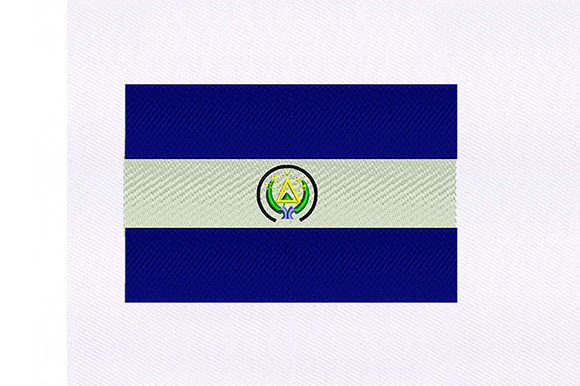
As an embroidery designer who’s prepped over 200 craft fair booths—from downtown pop-ups to regional handmade markets—I opened the Flag of El Salvador machine embroidery design with one question: Will this stop someone mid-aisle? The answer is yes—but not because it’s flashy. It’s bold in its simplicity: crisp blue-and-white stripes, balanced proportions (3.80″ × 2.52″ fits perfectly inside a 4×4 hoop), and a stitch count (14,836) that signals thoughtful digitizing—not overcrowded, not sparse. This isn’t a “cute” or “rustic” flag; it’s confident, clean, and quietly patriotic. That makes it ideal for makers who sell premium handmade products without leaning into kitsch.
Where It Shines: Product-by-Product Reality Check
The Flag of El Salvador thrives where clarity and cultural resonance intersect. Here’s how it performs across high-turnover craft fair staples:
- Tote bag design: Centered on natural canvas or heavyweight cotton duck, it reads instantly at arm’s length—no squinting, no confusion. Great for bilingual shoppers or diaspora customers seeking subtle heritage pride.
- Apron embroidery: Positioned just above the pocket on denim or linen aprons, it adds quiet authority—especially for food vendors, baristas, or small-batch bakers who want identity without loud branding.
- Tea towel embroidery: Works beautifully on medium-weight flour-sack or waffle-weave towels. The 4×4 size avoids overwhelming the fabric while staying legible after repeated washes.
- Embroidered patch: Excellent candidate for iron-on or sew-on patches—clean edges hold up through cutting, and the balanced stripe width prevents fraying at the borders.
- Caps & pouches: Use with caution. On curved cap fronts, test stitch density first—the blue stripes may compress slightly. For small fabric pouches (4–5″ wide), it’s a strong focal point when centered.
- Pillow covers & market bags: Scales well when used as a single statement motif—not repeated, not tiled. Adds instant visual weight without competing with patterned fabrics.
What Makes It Sell—Beyond the Symbol
This isn’t just a national flag—it’s a versatile design asset. As an Etsy seller or small shop product creator, you’ll appreciate how the Flag of El Salvador supports brand consistency: same clean lines across tote bags, patches, and tea towels means cohesive booth displays and recognizable listings. Customers notice it because it’s legible, proportional, and culturally grounded—not generic or clip-art-like. It photographs exceptionally well for digital listings: sharp contrast between blue and white threads pops against neutral backdrops, and the 4×4 footprint ensures consistent framing in printable mockups. For batch production? Yes—it’s repeatable. No tiny lettering, no micro-details, no gradients. Just confident, commercial-grade digitizing.
Careful-Use Notes Every Embroiderer Should Know
Even strong designs demand respect for material reality. Before stitching your first Flag of El Salvador finished product, keep these practical limits in mind:
- Dense stitch areas: At 14,836 stitches in a 4×4 hoop, the blue stripes carry moderate density—perfect for stable fabrics but potentially stiff on lightweight voile or stretchy knits. Always test on scrap.
- Fabric texture matters: Avoid highly textured tea towels (e.g., heavy-loop terry) unless you use cutaway + tear-away stabilizer combo. The clean lines can blur on uneven surfaces.
- Dark fabric warning: White thread on navy or black fabric will require underlay and possibly topping—but the design’s open spacing helps. Don’t skip thread contrast testing.
- Cap curvature: The straight horizontal stripes may distort slightly on structured front panels. Consider slight vertical compression in your embroidery software—or reserve it for flat-panel items like snapbacks or unstructured trucker caps.
- Small sizes: Do not shrink below 3.2″ wide. The stripe ratio collapses, and the white center stripe risks disappearing visually.
Designer-to-Designer Production Checklist
Before you load that first Flag of El Salvador embroidery file into your machine, run this quick verification:
- Test stitch on scrap fabric matching your target product (e.g., canvas for totes, linen for aprons).
- Confirm thread colors align with official flag specs—or intentionally deviate for aesthetic cohesion (e.g., navy + off-white for farmhouse appeal).
- Review spacing: Are stripe edges cleanly separated? No overlapping or bleeding?
- Double-check hoop size: This is a 4×4 design—don’t force it into a 3.5×3.5 hoop and expect clean results.
- Inspect stitch density visually: Look for thread buildup in corners or stripe junctions—adjust stabilizer type if needed (cutaway for stability, tear-away for breathability).
- Create at least one real mockup—not just a digital preview. See how it hangs, drapes, and catches light in person.
- Compare fabric color options side-by-side: A cream tea towel vs. oatmeal linen vs. natural canvas changes perceived contrast dramatically.
- Verify commercial licensing: If selling finished products, confirm the embroidery file permits commercial use—this is non-negotiable for craft fair sellers and Etsy sellers.
Final Thought: Why This Flag Belongs on Your Booth Table
The Flag of El Salvador doesn’t shout. It stands. It’s the kind of machine embroidery design that earns repeat customers—not because it’s trendy, but because it’s trusted. It says “handmade quality” without saying a word: precise registration, balanced fill, and intelligent scaling. For Independence Day markets, diaspora fairs, or multicultural pop-ups, it draws meaningful attention—not just decorative glances. When stitched onto a well-chosen tote or pillow cover, it elevates the entire handmade product. And that’s what sells: confidence, clarity, and quiet craftsmanship. Bring it to your next craft fair. Just bring extra stabilizer—and maybe a few extra patches. They’ll go fast.