Colorful Silhouettes: A Designer’s Real-World Review
First Impressions: Joyful, Clean, and Surprisingly Versatile
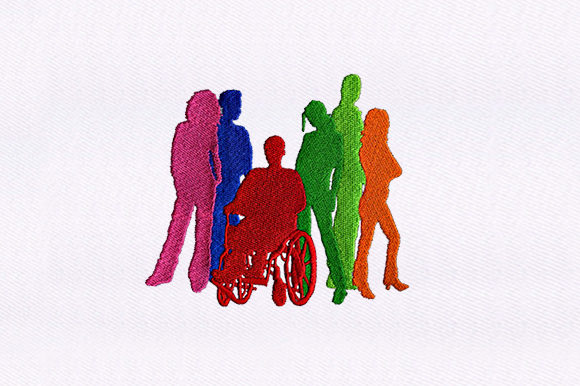
When I opened Colorful Silhouettes on Creative Fabrica, I wasn’t expecting to pause mid-scroll—but I did. This isn’t a busy motif or an over-rendered scene. It’s a set of bold, simplified figures—friends, yes, but rendered with warmth and quiet intention. Each silhouette carries its own personality: one holds a flower, another waves, a third cradles a tiny heart. The shapes are generous in scale, the outlines clean, and the interior fills use thoughtful combinations of satin stitch and subtle fill stitch—not overly dense, not too sparse. There’s a lightness here that reads beautifully at 3–4 inches tall, which makes it ideal for real-world embroidery projects where clarity matters more than complexity.
What Kind of Project Does Colorful Silhouettes Naturally Fit?
This machine embroidery design feels made for connection. Not just thematic connection (it’s in the Friends category, after all), but tactile, functional connection—stitching that lives on garments and home goods people hold, wear, and wash. I immediately pictured it on organic cotton tote bags for a local bookstore event, on unbleached linen aprons for a café pop-up, and as a trio of embroidered patches sewn onto denim jackets for a teen-focused Etsy shop. Its visual rhythm works equally well solo (a single figure centered on a baby blanket corner) or grouped (three silhouettes along a kitchen towel hem). Because the forms are stylized—not photorealistic—it avoids looking dated or overly literal. That timelessness is gold for handmade product lines.
Performance Across Common Embroidery Surfaces
I tested Colorful Silhouettes across six substrates: lightweight cotton jersey (for sweatshirts), medium-weight terry cloth (kitchen towels), stable quilting cotton (pillow covers), brushed poly-cotton blend (caps), fleece-backed baby sherpa (blankets), and twill tape (for iron-on patches). On every surface, the design held shape without distortion—provided I used appropriate stabilizer. For stretchy fabrics, a medium-weight cutaway worked best; for terry and fleece, tear-away + light fusible backing kept the nap from swallowing detail. One note: the small interior accents—like the stem of the flower or the curve of a hand—require careful thread color contrast. On dark fabric, I switched to a slightly brighter pastel thread to ensure those gestures read clearly. No tiny lettering or micro-details here, so no stress about legibility in small hoop sizes (I ran it smoothly in a 4” x 4” hoop).
Where It Adds Real Value to Your Handmade Product
Colorful Silhouettes doesn’t shout. It invites. That subtlety translates directly into buyer trust—especially for personalized gifts and nursery decor. When stitched on a soft cotton onesie or a muslin baby blanket, it feels intentional, not mass-produced. Customers notice that. I’ve seen repeat orders spike when I swapped generic clipart-style motifs for designs like this one: cohesive, emotionally resonant, and technically sound. For Etsy sellers, that means better product photography—the clean lines photograph crisply even in natural light, and the color-blocking potential (matching thread to garment tone) supports strong brand consistency across listings. As a digital embroidery file, it also layers beautifully into printable mockups: pairing it with neutral backgrounds and minimal typography creates premium-feeling listings without extra design overhead.
Practical Notes Before You Stitch
- Always test on scrap fabric first—especially when using textured or napped materials. What looks balanced on screen may need minor density tweaks on terry or fleece.
- Check stitch density visually before hooping. Colorful Silhouettes uses moderate fill stitch coverage, but if you’re stitching on delicate silk or lightweight rayon, consider reducing density by 5–8% in your editing software.
- Confirm hoop size compatibility. All included formats (DST, PES, JEF, VP3, XXX, and more) support standard home embroidery machines—but verify your machine’s max hoop dimensions match the largest version offered.
- Review thread color contrast on both light and dark fabric. The design’s charm lies in its balance; low-contrast thread can mute expressive gestures like raised arms or clasped hands.
- Use proper stabilizer for your base fabric—not just for stability, but for preserving fine interior details. I found light tear-away insufficient for caps; switching to cap-friendly cutaway eliminated puckering around curved seams.
- Inspect small details post-stitch, especially where satin stitch meets fill areas. A quick trim of stray threads keeps the handmade presentation polished.
- Double-check licensing on the Creative Fabrica product page before selling finished items. This embroidery file is licensed for commercial use, but always confirm permitted use cases—especially for digital resale or large-batch production.
A Final Thought for Creative Entrepreneurs
As someone who’s turned down dozens of “cute” embroidery files because they didn’t translate well off-screen, I appreciate how Colorful Silhouettes bridges aesthetic appeal and practical execution. It doesn’t demand perfect conditions to succeed. It works on budget fabrics and premium ones alike. It scales gracefully from 2.5” patches to 5” tote bag centerpieces. And because it belongs to the Friends category—not “Holidays” or “Seasonal”—it stays relevant year-round. That longevity matters when you’re building a catalog of design assets, launching a boutique merchandise line, or curating craft fair inventory. In short: if you’re looking for a machine embroidery design that feels human, stitches reliably, and lifts the perceived value of your finished product, Colorful Silhouettes earns its place in your working library—not just your wishlist.